The latest ideas, discoveries, innovations and achievements from ASU’s Knowledge Enterprise
News

Changing the world
From extreme heat to plastic pollution, our sustainability challenges are global and complex. ASU is tackling them in new ways.
Other multimedia collections
In-depth storytelling through articles, videos, podcasts and more.
Lab Coat Optional™ podcast
On Lab Coat Optional™, host Pete Zrioka interviews ASU researchers at the forefront of their fields — minus the jargon. Leave your lab coat at the door and tune in to learn about the latest research from ASU.
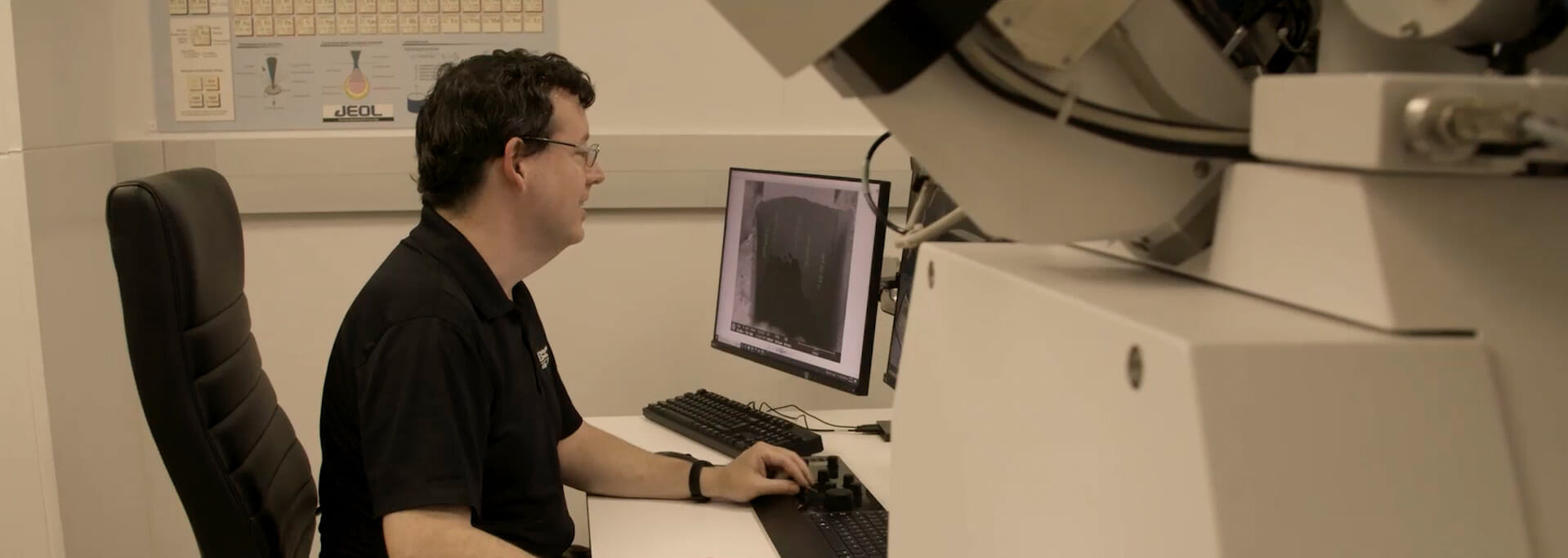
Lab Coat Optional is the show where research is made relatable. Each episode, we dive into the research, the people behind it and why it matters. Tune in for smart, accessible conversations on the latest research from Arizona State University, released every other Wednesday.
We are a production of Knowledge Enterprise at ASU. Learn more at research.asu.edu.
Astrophysicist Skylar Grayson explains how she uses supercomputer simulations to study black holes, how scientists can piece together a picture of phenomena billions of light years away and why communicating science clearly matters just as much as discovering it.
Find Skylar on:
Further reading:
Learn more about the School of Earth and Space Exploration at Arizona State University.
Lab Coat Optional is a production of the Strategic Marketing and Communications team at Arizona State University’s Knowledge Enterprise. Learn more about research and discovery at ASU on Instagram, LinkedIn and Bluesky or visit us at research.asu.edu.
Love the show? Give us a five star review on the podcast app of your choice!
Support our friends!
Check out AskABiologist wherever you get your podcasts!
Special thanks to Kaden Ryback for suggesting this episode!
Do you have an idea for an episode, or just want to torture the host with facts about dark matter? Get in touch at [email protected]!
Episode credits
Executive produced by Kate Howells
Produced by Alexander Chapin and Pete Zrioka
Hosted and reported by Pete Zrioka
Shot by Alexander Chapin
Edited by Alexander Chapin and Quinton Kendall
Original music from Patrick Cheung
Motion graphics by Andy Ramos
Art by Andy Keena and Sophia Franz
Editorial support from Diane Boudreau
Social media management by Lauren Hebing and Kyler Litson


Lab Coat Optional is the show where research is made relatable. Each episode, we dive into the research, the people behind it and why it matters. Tune in for smart, accessible conversations on the latest research from Arizona State University, released every other Wednesday.
We are a production of Knowledge Enterprise at ASU. Learn more at research.asu.edu.
Plastic is everywhere. The same material that makes modern life easier has also become a persistent environmental pollutant.
Charlie Rolsky — ASU alumnus and executive director of the Shaw Institute in Blue Hill, Maine — explores how microplastics move through our environment and into our bodies, what we do and don’t know about their impacts, and why “biodegradable” often doesn’t mean what we think. He also reflects on his journey from ASU to Maine — and how scientists balance urgency with responsible communication.
Learn more about
- The Shaw Institute (and their free touch tank!)
- Dirigo Sea Farm
Further listening
- Listen to Science Vs!
Lab Coat Optional is a production of the Strategic Marketing and Communications team at Arizona State University’s Knowledge Enterprise. Learn more about research and discovery at ASU on Instagram, LinkedIn and Bluesky or visit us at research.asu.edu.
Please give us a five star review on the podcast app of your choice! It helps other listeners find us.
Got an idea for us? Get in touch at [email protected].
Episode credits
Executive produced by Kate Howells
Produced by Alexander Chapin and Pete Zrioka
Hosted and reported by Pete Zrioka
Shot by Alexander Chapin
Edited by Alexander Chapin and Quinton Kendall
Original music from Patrick Cheung
Motion graphics by Andy Ramos
Art by Andy Keena and Sophia Franz
Social media management by Lauren Hebing and Kyler Litson
Disclosure:
Lab Coat Optional is intended for general knowledge and informational purposes only, and does not constitute medical advice. This show does not create a doctor-patient relationship, and the information provided is not a substitute for professional medical diagnosis or treatment. Consult with a qualified healthcare professional for any health concerns or before making any decisions related to your health. In case of a medical emergency, please call 911 or go to the nearest emergency room.
Opinions expressed on this show reflect the views of the individuals only, not the policy or opinion of Arizona State University.


Lab Coat Optional is the show where research is made relatable. Each episode, we dive into the research, the people behind it and why it matters. Tune in for smart, accessible conversations on the latest research from Arizona State University, released every other Wednesday.
We are a production of Knowledge Enterprise at ASU. Learn more at research.asu.edu.
As AI and emerging technologies reshape daily life, Andrew Maynard — scientist, author and professor in the Rob Walton College of Global Futures — discusses how we navigate disruptive innovation responsibly — and how we can hold onto our humanity in a rapidly changing world.
Further reading:
Listen to Andrew’s show, Modem Futura wherever you get your podcasts.
Learn more about Andrew’s Future of Being Human Initiative, and the Rob Walton College of Global Futures, part of the Julie Ann Wrigley Global Futures Laboratory at ASU.
Lab Coat Optional is a production of the Strategic Marketing and Communications team at Arizona State University’s Knowledge Enterprise. Learn more about research and discovery at ASU on Instagram, LinkedIn and Bluesky or visit us at research.asu.edu.
Love the show? Give us a five star review on the podcast app of your choice!
Get in touch with us at [email protected].
Episode credits
Executive produced by Kate Howells
Produced by Alexander Chapin and Pete Zrioka
Hosted and reported by Pete Zrioka
Shot and edited by Alexander Chapin
Original music from Patrick Cheung
Motion graphics by Andy Ramos
Art by Andy Keena and Sophia Franz
Editorial support from Diane Boudreau
Social media management by Lauren Hebing and Kyler Litson

Knowledge Enterprise in the news
Unfounded health claims are powering a solar backlash
To generate electricity, solar projects harvest energy from the sun. It’s not that different from what a field of corn or alfalfa does,” said Troy Rule, ASU law professor.
Read on https://www.salon.com/The world is entering a new era of wildfire. This huge blaze shows how hard they are to tackle
“Suburbs most affected by the blaze are a hot spot for loose building regulations and informal and rented housing”, said Alvaro Hofflinger, a social vulnerability expert at ASU.
Read on cnn.comPhoenix’s poet laureate dug into Emily Dickinson’s lost poems to give advice to a new generation
ASU professor and poet laureate Rosemarie Dombrowski’s collection of poetry takes a 21st century look at a 19th century poet.
Read on kjzz.orgNimble design, driving are key to ASU Rossum Rumblers Robotics Club as they head to championship
The Show talked to Alessandro Marcolini, ASU robotics club president, and lead engineer Enzo Muggler about the high-pressure competition.
Read on kjzz.orgASU’s ‘The Beam’ launches first investigation on 3D weapons
The Beam, a news initiative at the Walter Cronkite School and the Howard Center for investigative journalism investigated the the safety risks 3D- printed weapons pose to schools.
Read on azpbs.orgWater research; ASU medical school; Smiles 4 sick children
“Arizona Horizon”, hosts Dave White, director of ASU GIS institute, Elizabeth Baker, ASU associate dean of medical education, and Heather Clark, associate ASU engineering dean.
Read on azpbs.orgMedia inquiries
Sandy Keaton Leander
Assistant Director, Media Relations
ASU Knowledge Enterprise
[email protected]
480-727-3396
ASU Media Relations and Strategic Communications
[email protected]
480-965-3502
Hungry for more?
Peruse our publications to explore our top discoveries, learn about our research institutes and initiatives, download fact sheets, and more.